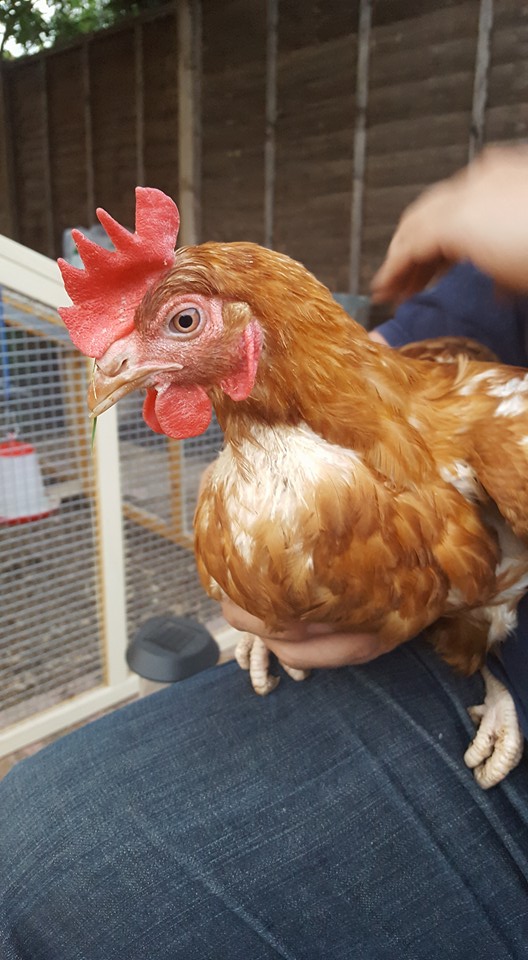
Our chickens are pets first and cute little egg factories second. This means that we've spent a fair bit more than the bare minimum to make sure our girls have a nice life. We've also tried to get things that will look good in our garden.
Most of what you need is available on Amazon, so the links below show where you can get them. For many things this will be the cheapest option, but for some you will get better deals elsewhere. If you have a good farm supply shop near you, you'll get most stuff you need at top prices there. Pet shops will stock many items but prices will tend to be significantly higher.
If you're going to order a lot of this stuff from Amazon, it may be worth getting Amazon Prime to save on delivery costs.
Housing
First things first, your chooks will need somewhere to live. They're going to need space, security and comfort.

Coops with an integrated run are a great idea for those of us who have to work for a living. This gives you easy access to the eggs and once the pop door is shut, the coop itself is fox-proof, warm, cosy and windproof.
are a great idea for those of us who have to work for a living. This gives you easy access to the eggs and once the pop door is shut, the coop itself is fox-proof, warm, cosy and windproof.
The run gives them some safe space to move around while we're out at work. I wouldn't want to leave the hens in this run 24/7 because it's not really enough space to keep them happy. Ours get free access to the whole garden as soon as we get in from work each day and all weekend, so a run like this is good enough for them. If you're planning to keep them locked up all the time, you'll want to consider a bigger enclosure
 .
.
free access to the whole garden as soon as we get in from work each day and all weekend, so a run like this is good enough for them. If you're planning to keep them locked up all the time, you'll want to consider a bigger enclosure.
It's also very important to make sure that your run is fox-proof. A nice sturdy run with thick wire mesh is a good start, but foxes can dig, so it's recommended to put paving slabs around the run. While foxes are happy to dig under the edge of a fence, they won't tunnel all the way under a paving slab.
around the run. While foxes are happy to dig under the edge of a fence, they won't tunnel all the way under a paving slab.
This coop is now a major feature of your garden, so you'll want it to look nice and make sure it doesn't rot. We used Cuprinol in blue and white.
in blue and white.Food and water

Now that the chickens have somewhere to live, they'll need to eat and drink.
We got some fairly cheap plastic feed and water dispensers, which we hang from the roof of the run with bungee cords .
.
, which we hang from the roof of the run with bungee cords.
Tap water is fine for them to drink, although some people say you should collect rain water for them as it's more natural.

The standard feed recommendation is layers pellets . These are designed to be a complete nutritional balance for chickens and will provide most of what they need. You'll also want to give them treats, but we'll get to that later.
. These are designed to be a complete nutritional balance for chickens and will provide most of what they need. You'll also want to give them treats, but we'll get to that later.
Chickens don't have any teeth, so they eat small stones which sit in their gizzards and help to grind up the food. They'll naturally scratch around and find stones to eat, but it's best to make sure they have a plentiful supply. A good idea is to get grit that's mixed with oyster shells , as the extra calcium helps the hens to produce good strong egg shells.
, as the extra calcium helps the hens to produce good strong egg shells.
 The pellets and grit will supply all the essential nutrients to keep your chickens healthy, but you'll probably also want to give them treats. Not only do treats make them happy and entertain you watching them run after anything you throw, but a good varied diet makes a massive difference to the quality and flavour of your eggs.
If your chickens are free ranging, they'll find a lot of variety for themselves. They'll eat grass and other plants and scratch in the ground for worms and bugs. They'll eat mice and frogs if they can catch them, steal cat or dog food and generally have a peck at anything you happen to drop in the garden.
Most fruit and veg get a good reaction. We've found that our girls particularly like tomatoes, melon, apple, potato (make sure you cook it first) and broccoli. Corn
is a good treat that you can control well if you want to train your chickens. We have found that putting it in an old parmesan dish allows us to open and close the lid so we can use it as a treat for being a good girl.
is a good treat that you can control well if you want to train your chickens. We have found that putting it in an old parmesan dish
allows us to open and close the lid so we can use it as a treat for being a good girl.
The one thing guaranteed to get the little critters running at you though is sardines . They're great nutrition, cheap and chickens love them. They're a good source of protein for egg production, the soft bones give calcium for shell and feather production and they're full of omega-3 oils for a nice rich yolk. Make sure you get them in either oil or tomato, not in brine as the salt is bad.
. They're great nutrition, cheap and chickens love them. They're a good source of protein for egg production, the soft bones give calcium for shell and feather production and they're full of omega-3 oils for a nice rich yolk. Make sure you get them in either oil or tomato, not in brine as the salt is bad.Cleaning and medical
Now that you've got all this food going in to your chickens, the bad news is that not all of it comes out in the form of eggs. Chickens poo a lot, everywhere. I really do mean a lot.
Your first weapon against the poo is a good choice of bedding. Some people use straw, although that can harbour parasites. Shredded paper could work, and I could get it free from my office, but it's not very absorbent and tends to be a big tangled mess, so hard to clean up. Some use woodchips, which you may be able to get free from a local gardener, but again not that absorbant. We use Aubiose Pet Bedding . It's absorbent, easy to scoop up the poop and it composts down well.
. It's absorbent, easy to scoop up the poop and it composts down well.
 The good news is that chicken poo isn't like other bird poo. It's much bigger, like something you'd expect from a small dog. Nine times out of ten, it's a big solid lump and very easy to just scoop up into a dustpan. We found that a small coal shovel
 is ideal for that job. That's all very well nine times out of ten, but the tenth time... your first cecal poo will come as a surprise. They're soft and kind of look like caramel sauce. They really don't smell like caramel sauce though. No chance scooping these, you're going to need a hose
 .
.
Once you've scooped up all this poo, you need to put it somewhere. Gardeners will tell you that chicken manure makes some of the best compost around, so get some compost bins. Most local councils will have some kind of subsidised deal on these, so it's worth shopping around. We got two of the big ones, and I'm starting to think that two will only just be enough for the amount produced by our four little poo factories.
Once a week, you'll want to completely change the bedding in your coop. This is a good time to give things a good clean to keep the parasites away.


 A good squirt of Poultry Shield
all round should disinfect everything nicely. You'll want to get a spray bottle to mix this up in. Once the poultry shield has dried, new bedding goes in and everything (including the hens) gets liberally dusted with diatomaceous earth powder (DE)
A good squirt of Poultry Shield
all round should disinfect everything nicely. You'll want to get a spray bottle to mix this up in. Once the poultry shield has dried, new bedding goes in and everything (including the hens) gets liberally dusted with diatomaceous earth powder (DE) . This is to guard against the dreaded red mite. Pay special attention to the perches to make sure the nasty little bugs can't get to your girls in the night.
The ground in the run gets sprinkled with Stalosan F powder to kill off any internal parasites like worms that may be lurking there.
powder to kill off any internal parasites like worms that may be lurking there.
It's good to have a pot of vaseline to hand. When you first get your hens, there might be some squabbling to establish the pecking order, so a good smear of vaseline on the comb and wattles is good so they can't grab each other and do any damage. It's also good on very cold nights to prevent frostbite on the combs.
 Purple spray
is needed for any injuries. Occasionally the chickens will get hurt, whether fighting, in accidents or just plucking out a feather and there will be a small amount of blood. Chickens love blood (and anything red) and will peck at a wound and make it much worse. A quick dose of purple spray stops it being quite so attractive and is also an effective antiseptic.
Purple spray
is needed for any injuries. Occasionally the chickens will get hurt, whether fighting, in accidents or just plucking out a feather and there will be a small amount of blood. Chickens love blood (and anything red) and will peck at a wound and make it much worse. A quick dose of purple spray stops it being quite so attractive and is also an effective antiseptic.
Many people will tell you to put apple cider vinegar (ACV) in the water supply. It's supposed to be a mild antiseptic due to being acidic and may have some other trace nutrients. I haven't managed to find any rigorous evidence that it actually works and studies conducted when it was a fad for humans a few years ago showed no beneficial effects, however it doesn't do any harm, so why not?
in the water supply. It's supposed to be a mild antiseptic due to being acidic and may have some other trace nutrients. I haven't managed to find any rigorous evidence that it actually works and studies conducted when it was a fad for humans a few years ago showed no beneficial effects, however it doesn't do any harm, so why not?Storage

 All the food you're storing could attract vermin, so it's important to have somewhere secure to store it. Rats will chew through a plastic bin, so get some metal ones
 .
.
You'll also want somewhere to store everything else, so a garden storage box
is a good idea unless you have a lot of spare shed space.
is a good idea unless you have a lot of spare shed space.
That should be just about everything you need to get yourself started. Once you get into it all, you might decide to get some toys, a more comfy garden chair to watch them from, new eggcups... But that's all for another post.